


How to Prepare an Installation Safety Checklist?
- Blog
- How to Prepare an Installation Safety Checklist?
How to Prepare an Installation Safety Checklist?
Table of Contents
- The Purpose of a Site Checklist
- From Risk Assessment to Checklist
- Personal Protective Equipment Checks
- Working at Height and Platform Safety
- Checking Lifting and Handling Equipment
- Hot Work, Welding and Spark Risk
- Energy Isolation and Lock-Out Procedure
- Confined Spaces and Gas Checks
- Team Briefing and Daily Inspection
- Conclusion
An installation site is a changing environment where many tasks and teams run at the same time. In that setting, a checklist is a simple but effective tool that stops a forgotten step from turning into an accident. A good checklist can be updated to match site conditions and must be understood by everyone who uses it.
The Purpose of a Site Checklist
A checklist ensures that critical safety points are checked systematically before work starts and during it. Repeating the same checks on every shift is more reliable than depending on memory.
The list does not replace a legal obligation, but it can serve as evidence that the work is being managed safely. The records show how the work was controlled on site.
From Risk Assessment to Checklist
A useful checklist should come from the site risk assessment. Every hazard, such as working at height, welding, lifting or confined space entry, should become a checklist item. Generic items that do not fit the actual job can lead the team to ignore the list.
When the risk assessment changes, the checklist should change too. A new piece of equipment, a new type of work or a different site layout may require a revision.
Personal Protective Equipment Checks
Personal protective equipment must suit the work, and it must be in sound condition and used correctly. Helmets, gloves, eye protection, safety footwear and, where needed, hearing protection should be checked at the start of each shift.
Damaged or unsuitable equipment should be marked clearly on the checklist. Work should not start until missing equipment has been provided.
Working at Height and Platform Safety
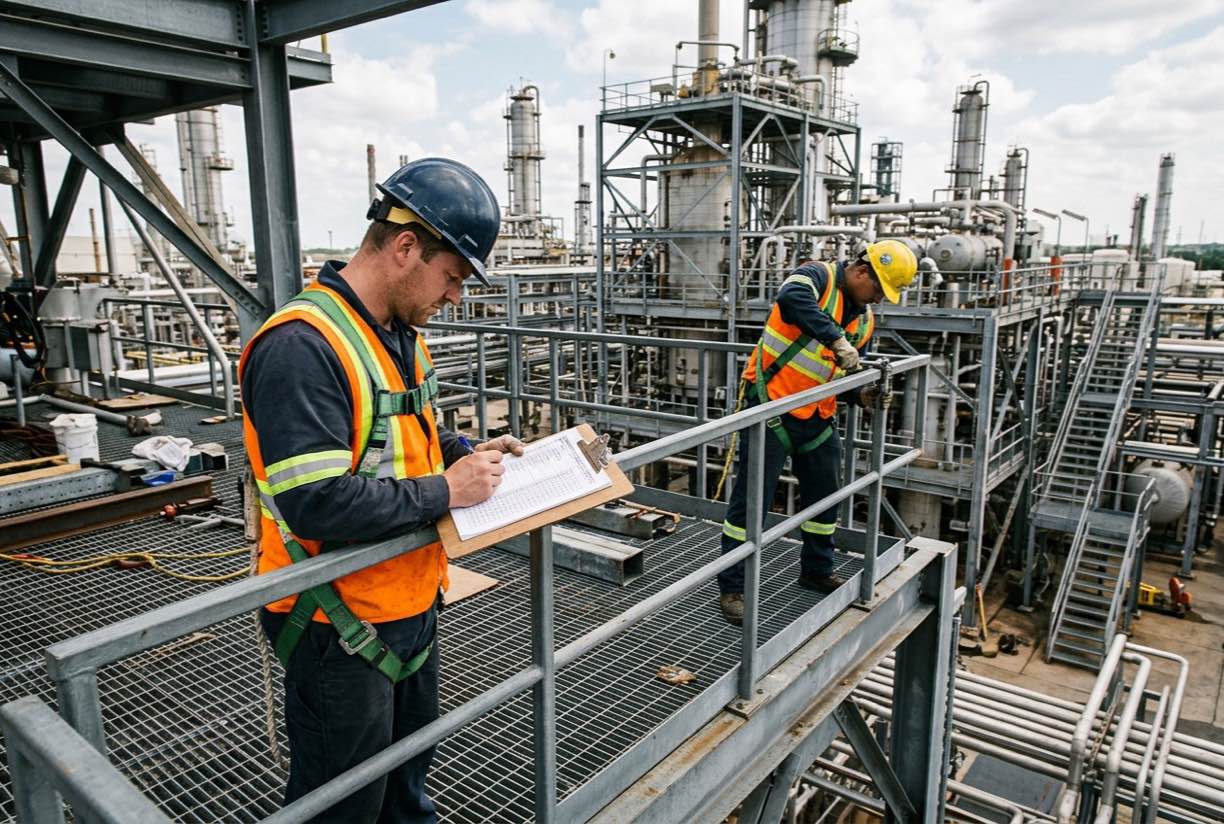
Working at height is one of the highest-risk groups on an installation site. The solidity of platforms, scaffolds and ladders, and the condition of guardrails and walking surfaces should be checked on the list. Use of harnesses and anchor points should also be confirmed at the start of the job.
The area below work at height should be cordoned off and suitable warning signs placed. It should also be checked whether another team is working below.
Checking Lifting and Handling Equipment
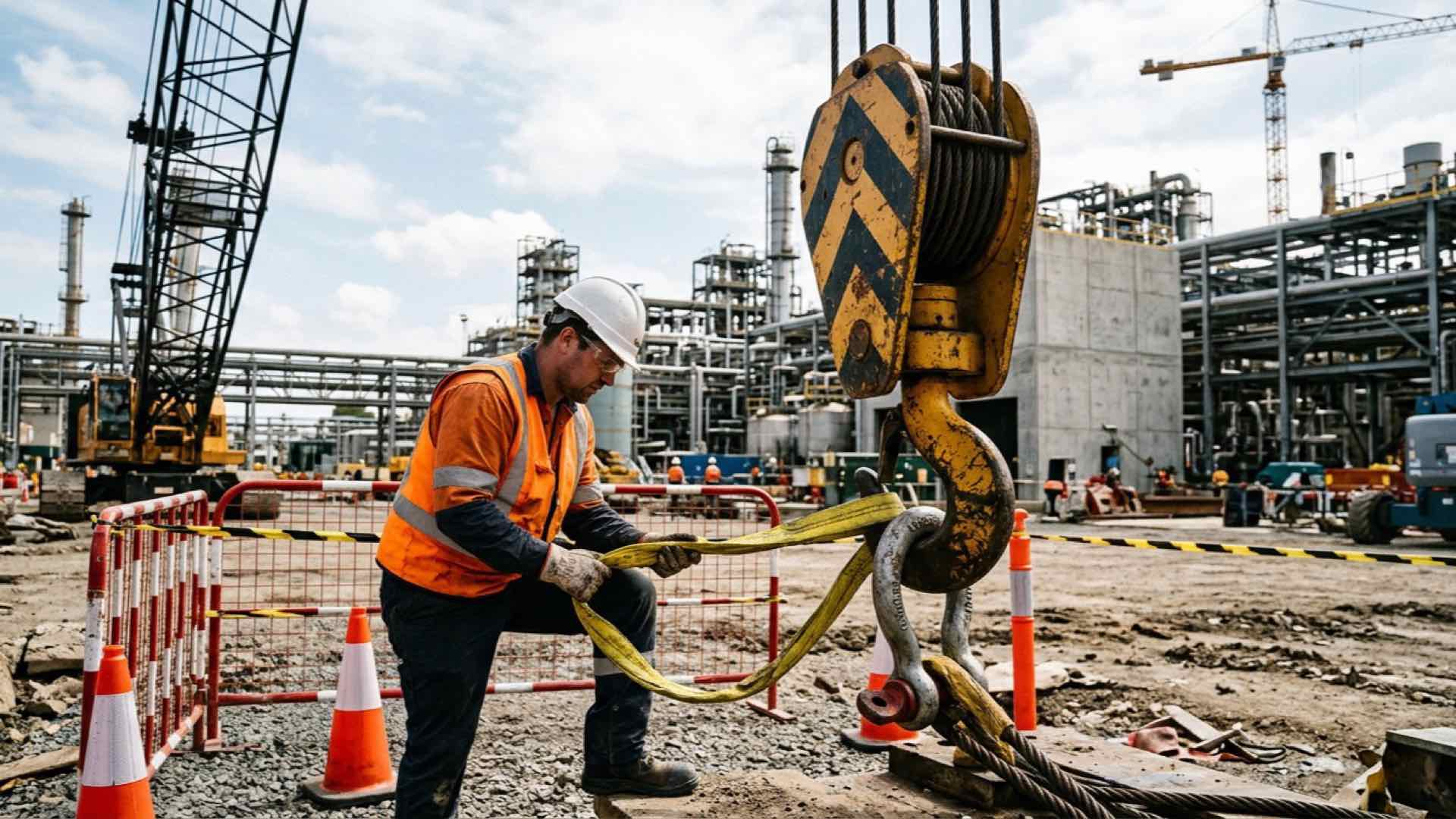
Cranes, forklifts, chains and slings should be inspected visually before use. The load capacity, the condition of the lifting gear and the method of securing the load should be confirmed before work starts. The lifting plan should be reviewed with the crew on site.
During transport, the balance of the load, the condition of the route and the position of people working nearby should also be assessed. Lifting is not carried out with unsuitable equipment.
Hot Work, Welding and Spark Risk
Welding and cutting carry fire and burn risks. Flammable materials nearby should be moved away, extinguishing equipment should be ready and spark screens should be placed. A hot work permit should be issued by an authorised person before the work begins.
Monitoring the area for a period after welding should also be added to the list. A spark that has caught can cause problems even after the job is finished.
Energy Isolation and Lock-Out Procedure
Energy sources must be isolated and locked out during maintenance and installation. The isolation of electrical, hydraulic, pneumatic and chemical lines should be verified separately for each source. The lock and tag system should remain under the control of the person doing the work.
Equipment is not touched before isolation is verified. Energy is restored only through a written step, after it has been confirmed that everyone has moved clear.
Confined Spaces and Gas Checks
Before entering tanks, ducts and other confined spaces, oxygen, gas and vapour levels should be measured. Entry should not be made on site without ventilation. An attendant who monitors the entry and can respond in an emergency must be present.
The acceptance range for measured values should be set by the relevant procedure and an authorised person. If the values are outside the range, work does not begin.
Team Briefing and Daily Inspection
A short briefing should be held at the start of each shift, sharing the day's tasks, hazards and any changes to the checklist with the crew. The attendance list of the briefing should be recorded.
The daily inspection is completed on the list and signed by the responsible person. Work is not considered finished while identified non-conformities remain open.
Conclusion
An installation safety checklist for crews is a tool that comes from the risk assessment, is adapted to the site and is used on every shift. When personal protective equipment, work at height, lifting, hot work, energy isolation and confined space checks are handled together, site safety improves considerably.
SS Proje supports the application of site quality and safety processes during installation. Checklist items and acceptance criteria should be set for each project according to local regulations and the risk assessment.