



Hygienic Sampling Valves: Rules for Representative and Safe Sampling
- Blog
- Hygienic Sampling Valves: Rules for Representative and Safe Sampling
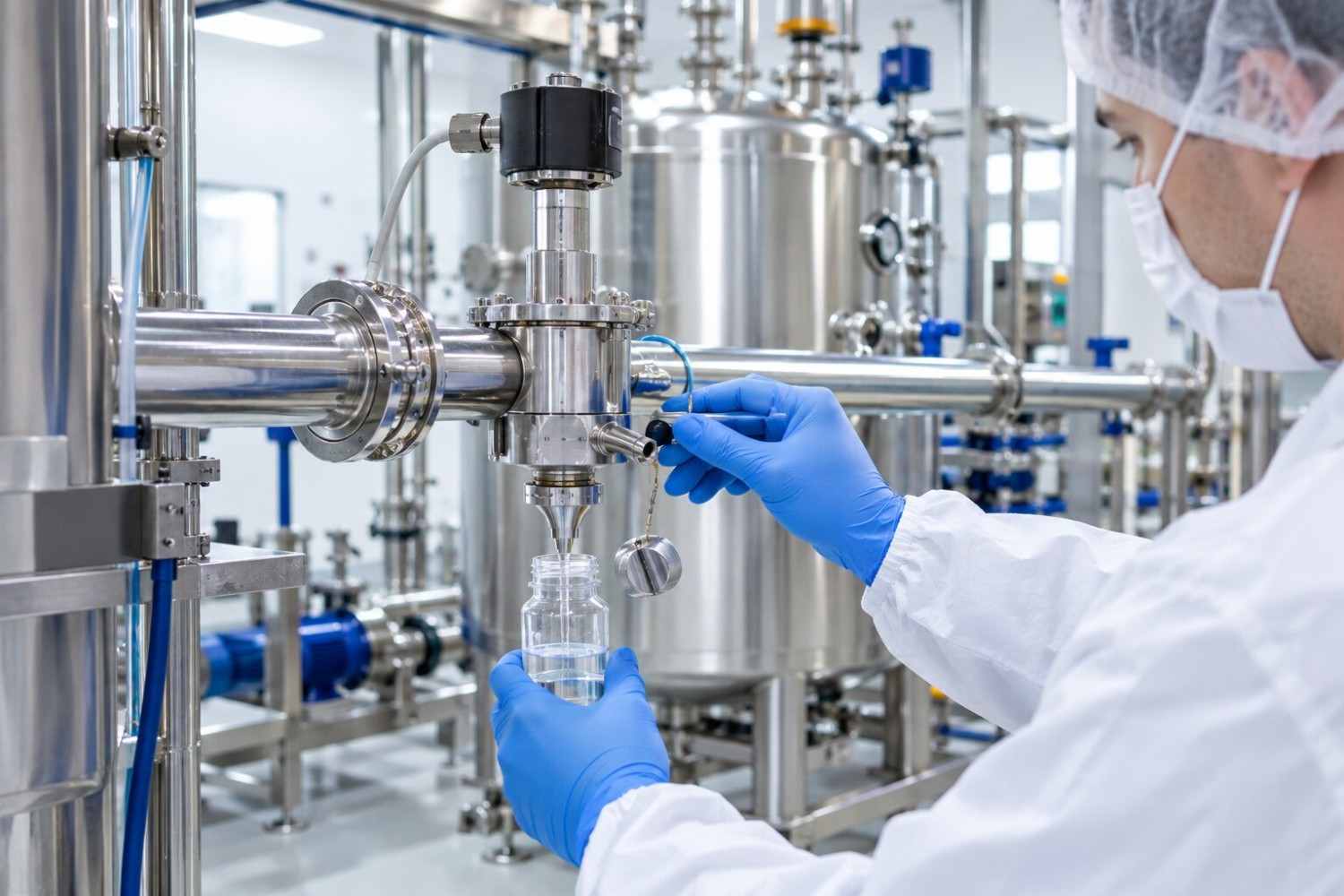
Hygienic Sampling Valves: Rules for Representative and Safe Sampling
Table of Contents
- What is a Hygienic Sampling Valve?
- Why Ordinary Valves Cannot Be Used
- Types of Sampling Valves
- Rules for Representative Sampling
- Preventing Contamination
- Location and Ergonomic Access
- Planning Sampling Points
- Sampling in Purified Water Systems
- Maintenance and Traceability
- Frequently Asked Questions
- Conclusion
In food, pharmaceutical, and biotechnology manufacturing, quality control relies heavily on analytical samples drawn directly from the process line. However, sampling is far more complex than simply opening a valve. A sample taken from an unrepresentative point or using an improper technique may fail to reflect true process conditions or, worse, introduce contamination into the batch. Consequently, critical manufacturing steps demand dedicated hygienic sampling valves. In this article, we explain how these specialized valves operate and detail the essential rules for collecting valid, representative samples.
What is a Hygienic Sampling Valve?
A hygienic sampling valve is a specialized valve designed to draw representative product samples from a process line or vessel without compromising product sterility or integrity. Engineered with smooth internal contact surfaces, minimal internal volume, and clean-in-place (CIP) geometry, many models allow thermal steam sterilization or chemical rinsing immediately before and after sample collection.
Why Ordinary Valves Cannot Be Used
Using standard ball valves or utility spigots for process sampling introduces severe operational risks. Stagnant product retained within internal body cavities degrades between sampling intervals, skewing analytical results. Uncleanable internal crevices harbor microbial growth, presenting an ongoing cross-contamination risk to the main process stream. Furthermore, long connection nipples form dead legs where product stagnates. Hygienic sampling valves eliminate these failure modes by design.
Types of Sampling Valves
- Diaphragm-Type Sampling Valves: A flexible diaphragm isolates wetted internal surfaces from the actuation mechanism, optimizing drainability and CIP capability.
- Steam-Sterilizable (SIP) Valves: Built with dedicated steam inlet and drain ports to allow localized thermal sterilization of the valve chamber prior to and following sample extraction. Highly preferred for sterile applications and microbiological monitoring.
- In-Line Welded Body Valves: Welded directly flush into the process piping wall to eliminate dead legs entirely.
- Tank-Mounted Valves: Installed flush with the inner vessel wall to draw representative bulk liquid samples directly from storage or reaction tanks.
Rules for Representative Sampling
To ensure a sample accurately reflects true process conditions, specific operational criteria must be met. Sampling points must be located in areas of continuous flow and turbulent mixing. Samples drawn from stagnant zones, long branch legs, or vessel bottoms can yield misleading analytical data. Prior to collecting the final test volume, any residual product within the valve body and connection port must be thoroughly flushed. Sample container preparation and operator handling techniques are equally vital to outcome accuracy.
Preventing Contamination
The physical act of sampling opens a potential pathway for environmental contamination. To mitigate this risk, sampling valves are cleaned or steam-sterilized before opening, and flushed again immediately after closure. Keeping valve discharge nozzles capped during routine production prevents ambient particulate or microbial ingress. In sterile manufacturing, aseptic transfer techniques and closed-loop sampling assemblies are strictly enforced.
Standardized, written operating procedures (SOPs) alongside rigorous operator training are critical to maintaining sampling integrity. Inconsistent sampling methods among different technicians can introduce unexplained analytical variability. Standardized procedures must define pre-flushing durations, valve preparation, container orientation, and post-sampling sanitization steps. If an out-of-specification (OOS) result occurs, sampling technique must be investigated as a potential root cause.
Location and Ergonomic Access
Sampling valve locations must balance process representativeness with safe operator access. Technicians require ergonomic, unobstructed clearance to position sample containers, operate actuators, and safely connect auxiliary steam lines. When handling high-temperature or pressurized fluids, safety interlocks or operator shielding should be implemented. Strategic valve locations are best established during the 3D design phase in collaboration with process and operations personnel.
Planning Sampling Points
Determining sampling locations is a foundational step in defining a facility's quality control strategy. Raw material receiving lines, outputs from critical reaction stages, bulk tank holds, pre-filling filtration lines, and utility generation points represent primary sampling sites. The rationale, testing frequency, sample volume, and analytical protocol must be documented for each location. Over-specifying sampling ports unnecessarily increases capital costs and contamination risks, while omitting critical points creates gaps in process verification.
Sampling in Purified Water Systems
In Purified Water (PW) and Water for Injection (WFI) loops, routine sampling is mandatory to verify microbiological and chemical compliance. Samples drawn from points-of-use must reflect the exact water quality delivered to production processes. Consequently, sampling is ideally performed directly through the production valves or dedicated zero-dead-leg sampling ports. Proper placement ensures the overall sanitary baseline of the loop is preserved. In water system engineering, sampling port placement forms an integral part of sanitary loop design.
Maintenance and Traceability
Like all sanitary process components, sampling valve diaphragms and seals require routine inspection and scheduled replacement. Damaged or degraded elastomeric seals compromise sample accuracy and become active contamination sources. Detailed sampling logs—documenting timestamp, operator identity, sampling point tag, and method used—are essential for maintaining regulatory audit trails and batch release confidence.
Frequently Asked Questions
Should every process line feature a sampling valve?
No. Sampling locations should be determined through formal risk assessments and quality control strategies. They are primarily located at critical control points, key reaction stages, and utility distribution headers.
Can sampling valves be retrofitted into existing pipework?
Yes, but retrofitting sanitary process piping requires cutting, orbital welding, non-destructive examination (NDE), and system re-qualification. Planning sampling locations during initial engineering is far more cost-effective.
Are specialized valves required for microbiological sampling?
Yes. Microbiological monitoring requires sampling valves capable of localized steam-in-place (SIP) sterilization or rigorous chemical sanitization immediately prior to opening to prevent false-positive contamination readings.
Hygienic sampling valves safeguard product integrity while providing reliable analytical access for process validation. Selecting the appropriate valve type, optimizing physical placement, establishing clear SOPs, and maintaining scheduled seal replacements form the foundation of compliant sampling practices. Contact us to collaborate with our engineering team on optimizing your process sampling strategy.