
Industrial Hygienic Installation
- Blog
- Industrial Hygienic Installation
Industrial Hygienic Installation
Table of Contents
- Key Criteria in Hygienic Piping Design
- Stainless Steel Pipe and Material Selection
- Welding and Surface Quality in Hygienic Piping
- How to Design CIP-Compatible Piping?
- Slope, Drainage, and Dead Leg Control in Hygienic Piping
- Post-Assembly Testing and Inspections
Key Criteria in Hygienic Piping Design
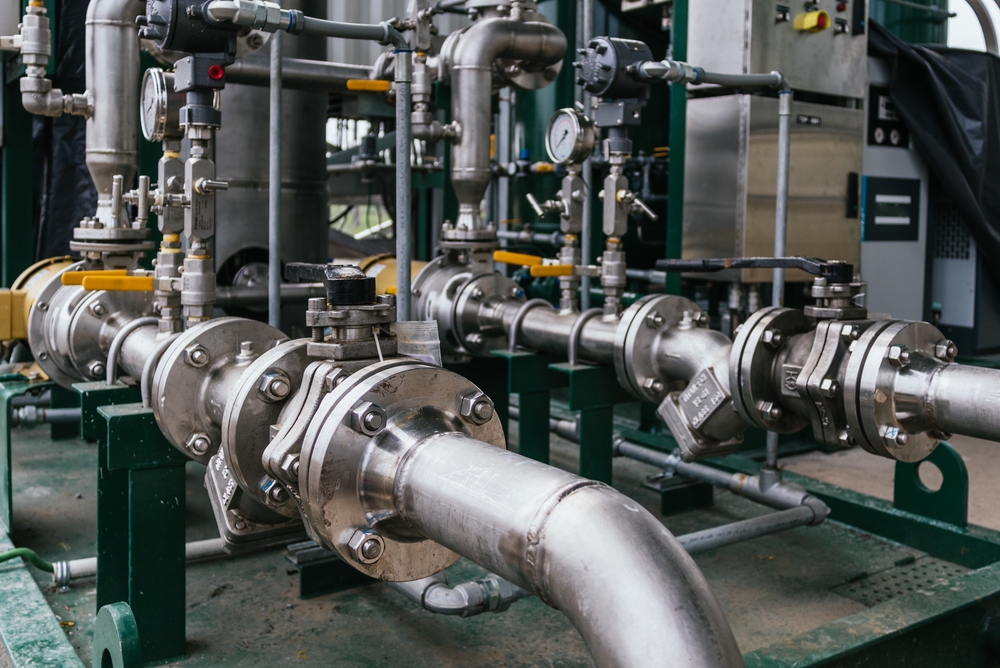
In processes where product hygiene is critical, such as food, beverage, pharmaceutical, biotechnology, and cosmetics, the design of the piping system must be carried out by jointly evaluating material selection, surface quality, cleanability, drainage, and connection details. The objective is to create a system that supports the applicability of cleaning procedures on product-contact lines and the fulfillment of process requirements.
The following criteria can be particularly taken into account in hygienic piping design:
- Product-contact surfaces having suitable material and surface properties
- Planning of pipelines with diameters and routes appropriate to process requirements
- Limitation of geometries that may cause liquid accumulation
- Facilitation of access for cleaning and maintenance operations
- Application of welds and connection points in accordance with hygienic design criteria
- Planning of testing, cleaning, and commissioning operations according to project requirements
The technical criteria to be applied may differ according to the facility’s process, the products used, the cleaning method, and the project specification.
Stainless Steel Pipe and Material Selection
In hygienic piping applications, material selection must be made by taking into account process conditions and product-contact requirements. Stainless steel is widely used in these applications due to its corrosion resistance, cleanability, and quality options suitable for process conditions.
The selection of stainless steel grades such as AISI 304 and AISI 316L should be made by evaluating the characteristics of the product being conveyed, temperature, pressure, cleaning chemicals, and process conditions. It should not be assumed that a single material grade is automatically suitable for every application.
In material selection, in addition to the pipe, valves, gaskets, fittings, and other product-contact components must also be evaluated together. The technical documents and conformity certificates of the materials to be used can be checked in accordance with project requirements.
Technical documents and standards that can be used as references in hygienic piping systems may include ASME BPE, DIN 11850, DIN 11866, and EHEDG documents related to hygienic design. Which standard will be applied should be determined according to the facility’s sector and project conditions.
Welding and Surface Quality in Hygienic Piping
In hygienic piping systems, welding quality is an important application issue in terms of the cleanability of the pipeline and long-term operating conditions. The welding method should be determined according to the pipe diameter, material, project conditions, and application conditions.
In stainless steel pipes, in addition to proper welding application, the internal surface quality of the weld zone must also be taken into account. Depending on the application conditions, TIG or orbital welding methods may be preferred.
The use of suitable shielding gas during welding can help limit unwanted oxidation in the weld zone. When necessary, post-weld operations such as surface cleaning, grinding, or passivation may be applied according to project and process requirements.
Surface roughness is also one of the criteria taken into account in hygienic piping design. The required surface quality should be determined according to the process to be used and the relevant technical specification.
How to Design CIP-Compatible Piping?
CIP (Clean-In-Place) refers to the cleaning of equipment and pipelines with specific cleaning procedures without dismantling them from their positions. In a piping system to which CIP will be applied, the line geometry, connections, and equipment must be compatible with the cleaning procedures.
In CIP-compatible design, the following issues should be evaluated together:
- The cleaning flow being able to reach the relevant sections of the pipeline
- Limitation of geometries that may cause liquid accumulation
- Creation of suitable drainage points
- Selection of valves and fittings suitable for the cleaning procedure
- Evaluation of the effect of cleaning chemicals on the materials
- Compatibility of process conditions such as cleaning temperature, flow rate, and pressure with the design
Since the cleaning procedure to be used in CIP design may vary according to the facility’s product and process, the piping design must be evaluated together with the relevant process requirements.
Slope, Drainage, and Dead Leg Control in Hygienic Piping
In hygienic piping systems, the geometry of the pipeline is important for the applicability of cleaning and drainage operations. Unsuitable routes may cause liquid accumulation or insufficient realization of cleaning operations.
The slope of the pipelines should be determined by taking into account the flow and drainage conditions required by the process. Especially in lines conveying liquid products, the drainage structure should be addressed at the design stage so that the system can be emptied from suitable points.
Limiting connection and pipe geometries known as dead legs, where process flow or cleaning flow cannot sufficiently reach, is also one of the important elements of hygienic design. Valve connections, branches, sampling points, and equipment connections should be evaluated from this perspective.
The slope, connection geometry, and drainage details to be applied should be determined according to the facility’s process, the piping standard, and the project specification.
Post-Assembly Testing and Inspections
After the hygienic piping assembly is completed, the system’s compliance with project requirements can be evaluated through different inspection stages. The scope of the tests and the methods to be applied should be determined according to the intended use of the pipeline, design conditions, and the project specification.
Leakage Control
It is checked whether there is any leakage in the pipeline and connection points. The test method and test conditions to be applied should be determined according to the relevant project documents.
Welding and Surface Control
Weld zones and related surfaces can be visually inspected. Where specified in the project conditions, additional examination methods may be applied.
Cleaning and Drainage Control
The system’s compliance with the cleaning procedure and drainage requirements is checked. In systems to which CIP will be applied, it is evaluated whether the cleaning flow reaches the relevant lines and whether the system can be properly emptied.
Documentation
Test results, documents related to the materials used, and the necessary quality control records can be documented within the project scope. The scope of the documents to be prepared should be determined according to the project specification.
In hygienic piping applications, the joint evaluation of the design, material, welding, assembly, cleaning, and testing stages helps the system be created in accordance with its intended use and project requirements.