


Monitoring Pressure Difference to Detect Heat Exchanger Fouling
- Blog
- Monitoring Pressure Difference to Detect Heat Exchanger Fouling
Monitoring Pressure Difference to Detect Heat Exchanger Fouling
Table of Contents
- How Fouling Affects a Heat Exchanger
- Why Pressure Difference Indicates Fouling
- Measurement Points and Gauge Placement
- The Clean-Condition Reference Value
- Correcting for Flow Rate
- Trend Tracking and Cleaning Timing
- Assessing Together with Heat Transfer Data
- Interpreting by Fouling Type
- Verification After Cleaning
- Conclusion
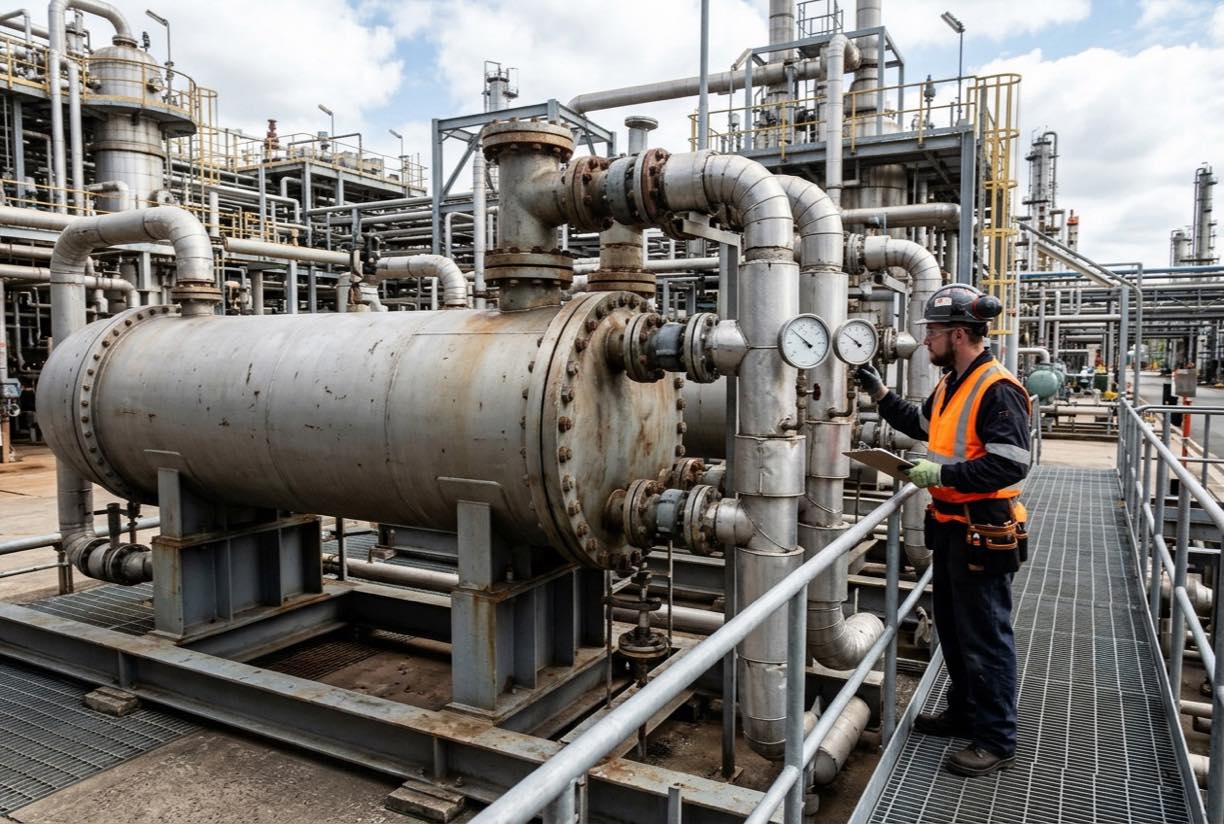
In heat exchangers, fouling is caused by scale, biofilm or product residue building up on the surfaces. These deposits both reduce heat transfer and increase resistance in the channels the fluid passes through. Monitoring the pressure difference is one of the practical ways to detect that increase in resistance.
How Fouling Affects a Heat Exchanger
Every layer deposited on the surface makes it harder for heat to pass between the fluids. To transfer the same heat load, the system needs a larger temperature difference. This increases energy use and affects process stability.
Fouling also narrows the flow passage. Passing through the narrowed channels requires the fluid to have more pressure. This difference is a signal that can be monitored.
Why Pressure Difference Indicates Fouling
The pressure difference between the inlet and outlet of the exchanger shows the total resistance the fluid meets as it passes through the channels. As contamination builds up in the channels, this resistance rises and the pressure difference increases. The rise gives indirect but useful information about the degree of fouling.
Because pressure difference is simpler to monitor continuously than heat transfer measurement, many plants use it as the first warning indicator.
Measurement Points and Gauge Placement
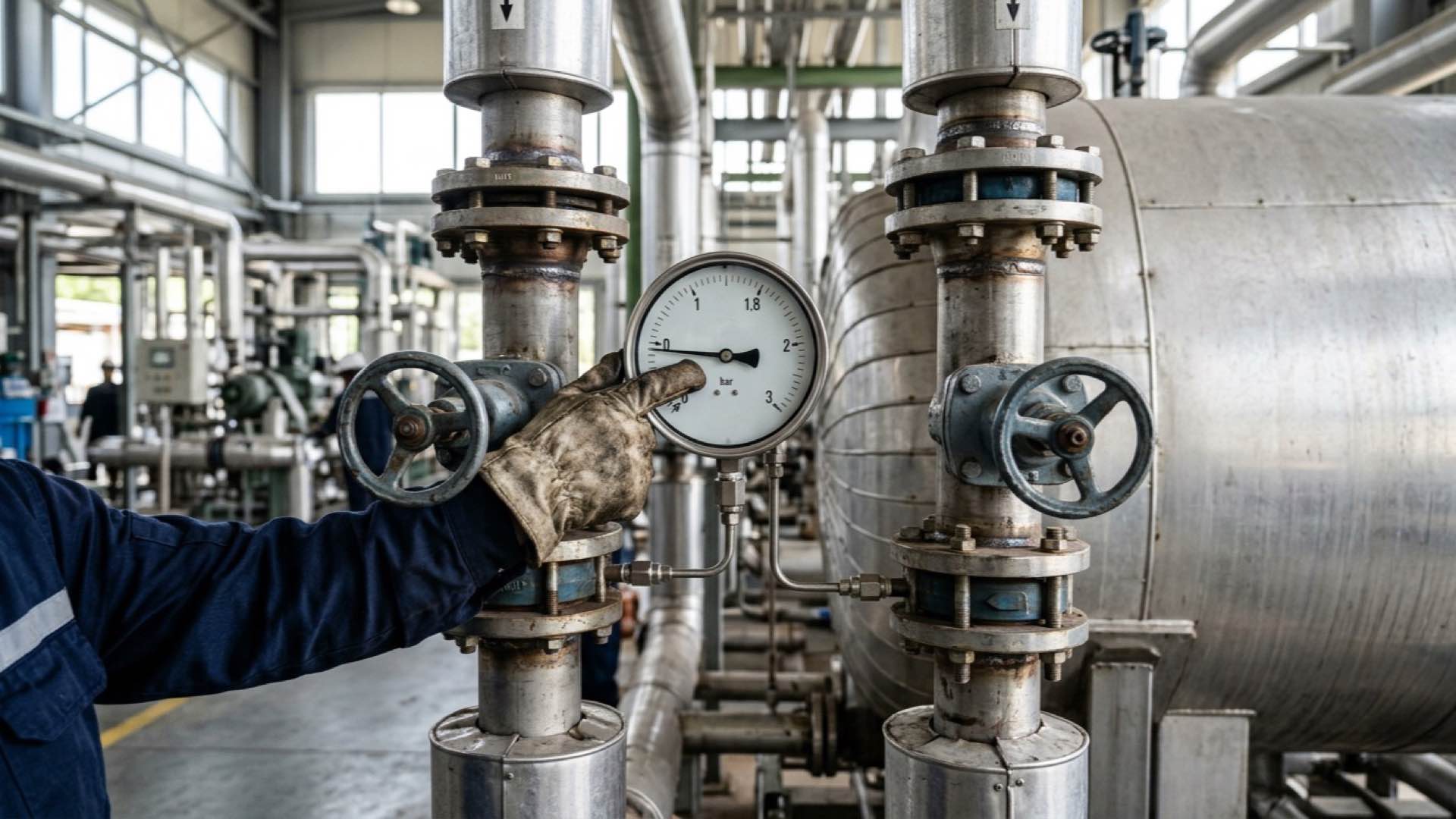
The pressure difference is measured across the exchanger on each flow side, at inlet and outlet points. Measurement points should be chosen on straight pipe sections so that turbulence and elbow effects are reduced.
Pressure impulse lines should be kept clear through suitable placement and periodic cleaning. A blocked impulse line gives misleading readings.
The Clean-Condition Reference Value
After the exchanger has been cleaned or newly commissioned, the pressure difference at that moment should be recorded as the reference. This value is the baseline against which later readings are compared. The reference should be taken at the same flow rate and temperature condition.
The reference value should be assessed against the design data. If the difference from the design value is large, the problem may come from a cause other than fouling.
Correcting for Flow Rate
Pressure difference varies with the square of the flow rate. When the flow changes, so does the pressure difference, so comparing raw values directly can mislead. The measurement should be expressed as a value corrected for flow.
The flow measurement or estimate should be recorded, and the correction method should be applied consistently.
Trend Tracking and Cleaning Timing
When the corrected pressure difference is recorded over time, a trend forms. That trend shows how fast fouling is progressing. Cleaning timing can be planned against a threshold value set from the trend.
The threshold should be set by engineering assessment, taking into account the design limits, pump capacity and production requirements. No fixed threshold is given in this article.
Assessing Together with Heat Transfer Data
A rise in pressure difference does not always come from fouling. Sometimes a disturbance in flow distribution, a valve position or another process change can have a similar effect. For this reason the pressure difference should be read together with heat transfer data such as the approach temperature.
When both values rise together, that is a strong indication of fouling. A rise in pressure alone may point to another cause.
Interpreting by Fouling Type
Scale, biofilm and product residue build up at different rates and in different forms. Scale usually builds up slowly on the hot side, while biofilm can develop quickly in cold and stagnant areas. The type of fouling is an important input when interpreting the trend.
Identifying the type of fouling is also needed to choose the cleaning method. Cleaning with the wrong chemical can damage the surface without solving the problem.
Verification After Cleaning
After cleaning is complete, the pressure difference should be measured again under the same flow and temperature conditions. A value that approaches the reference shows the cleaning has been effective. A value that does not fall indicates the cleaning was insufficient or another problem exists.
The values before and after cleaning should be recorded, and the effect of the cleaning documented through this comparison.
Conclusion
Monitoring pressure difference to detect heat exchanger fouling becomes effective through correct measurement points, a clean-condition reference, flow correction, trend tracking and interpretation alongside heat transfer data. This approach allows cleaning to be planned on real need and its result to be verified.
SS Proje provides technical support for the design, manufacture and monitoring of thermal systems. Threshold values and cleaning criteria should be set for each exchanger using manufacturer data and the judgement of a qualified engineer.