

What Is Rouging? Why Discoloration Forms in Stainless Steel Systems
- Blog
- What Is Rouging? Why Discoloration Forms in Stainless Steel Systems
What Is Rouging? Why Discoloration Forms in Stainless Steel Systems
Table of Contents
- What is Rouging?
- Why Does Rouging Occur?
- Types of Rouging
- Is Rouging a Risk?
- How is Rouging Monitored?
- How is Rouging Removed? Derouging and Re-passivation
- Design Measures to Reduce Rouging Formation
- How to Establish a Rouging Management Program?
- Frequently Asked Questions
- Conclusion
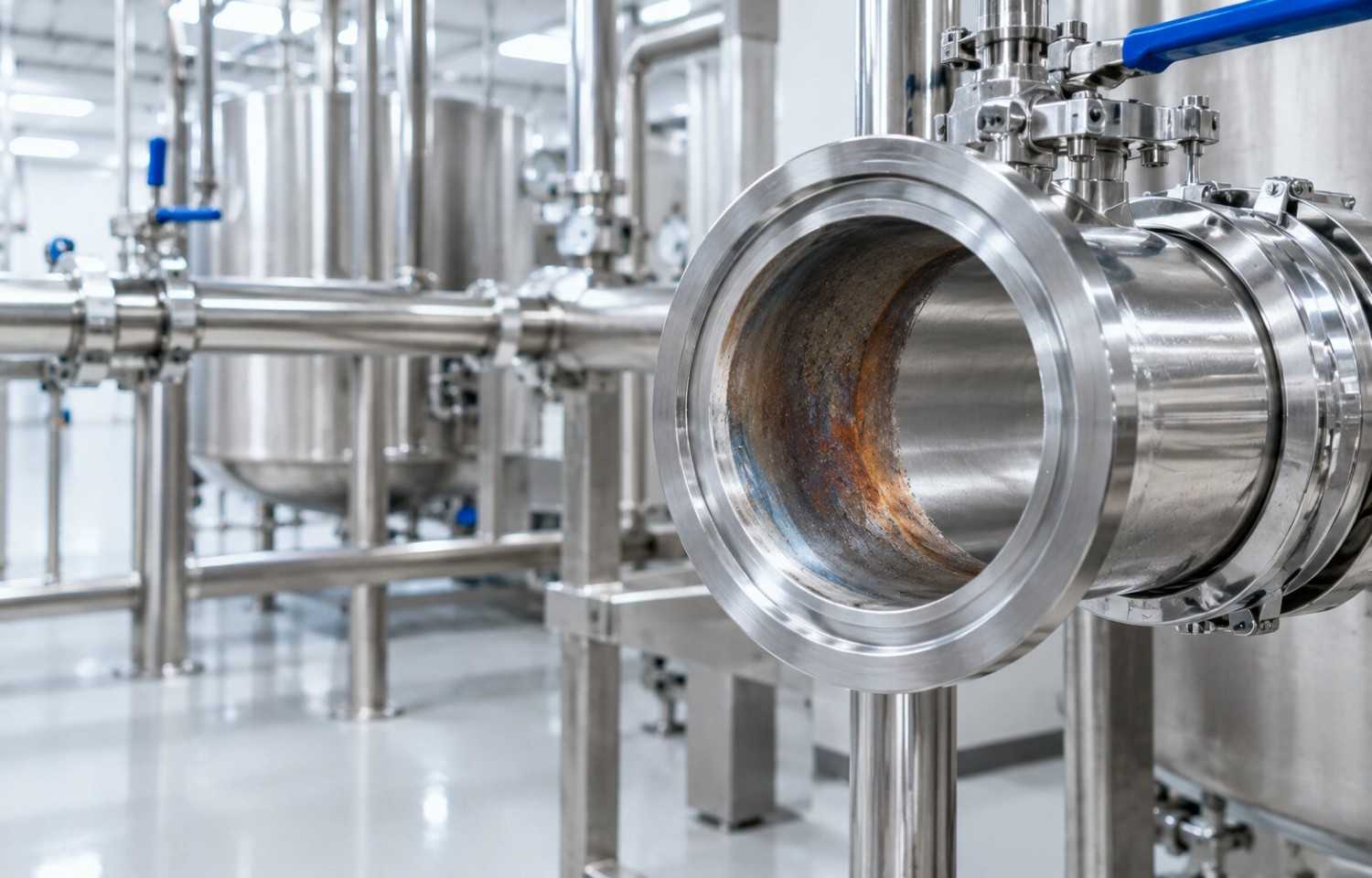
Teams operating purified water, water for injection, and pure steam systems occasionally encounter a specific condition: a discoloration on stainless steel internal surfaces ranging from orange to red, or even dark gray. This phenomenon is known as rouging. Rouging does not always signal an immediate danger; however, it is a process that needs to be monitored and managed. In this article, we cover what rouging is, why it occurs, and how it can be kept under control.
What is Rouging?
Rouging is the accumulation of a layer composed of iron oxide and hydroxide compounds on stainless steel surfaces in contact with high-purity water and steam. It takes its name from the French word "rouge," which means red. It differs from conventional rusting; it typically emerges over time as a result of the interaction between the surface's passive layer and the water or steam in the system.
Why Does Rouging Occur?
There is no single cause for rouging. The main factors influencing its formation are:
- High temperature: Water for injection loops kept hot and pure steam lines carry a higher risk.
- High-purity water: Water with very low ionic content can interact more aggressively with the metal surface.
- Surface condition: Surfaces that are rough, poorly passivated, or exhibit weld discoloration are more susceptible.
- Material variations: The presence of components with different grades or different surface finishes within the system.
- Iron from external sources: Particles released due to wear and tear in equipment such as pumps being carried through the system.
Types of Rouging
In practice, rouging is generally evaluated in three classes:
- Class I: A particulate deposit, usually orange-red in color, originating from another source and carried onto the surface, which can be wiped off. The source is often pumps or other equipment.
- Class II: A layer formed in situ on the surface, which adheres more tightly and can range from red to purplish hues. It is typically associated with factors like chlorides and the passive state of the surface.
- Class III: A dark gray-black, highly stable magnetite layer observed in high-temperature steam systems.
Is Rouging a Risk?
The impact of rouging on product quality varies depending on the type and amount of the deposit, as well as the intended use of the system. A light, stable layer may not pose a direct product risk on its own. However, rouging must be monitored due to the potential for particles to migrate into the product, increased difficulty in surface inspection, and the acceleration of corrosion over time. Especially in pharmaceutical facilities, rouging management is typically handled through a monitoring program defined within the quality system.
How is Rouging Monitored?
Common methods for monitoring rouging include:
- Internal surface inspection using a borescope during scheduled maintenance shutdowns
- Inserting removable coupons or sample pieces into the system and examining them periodically
- Visual inspection of accessible points such as tank interiors, spray balls, and valve bodies
- Evaluating the layer removed from the surface using a wipe test
- Documenting observations with photographs and tracking changes over time
How is Rouging Removed? Derouging and Re-passivation
When rouging reaches a certain level, the oxide layer on the surface must be chemically removed. This process is called derouging. Following derouging, passivation is typically re-applied to protect the surface. The choice of chemicals, temperature, duration, and rinsing steps should be determined based on the type of rouging and the system's structure. Following the procedure, necessary tests and records must be completed before returning the system to service.
Design Measures to Reduce Rouging Formation
It is not always possible to eliminate rouging entirely; however, the rate of formation can be significantly reduced through design and installation decisions:
- Selecting appropriate materials and surface finishes for product-contact surfaces
- Using controlled orbital welding to minimize weld discoloration
- Properly passivating the system prior to commissioning
- Avoiding the uncontrolled use of components with different materials and surface finishes within the system
- Monitoring the wear and tear of pumps and other moving equipment
SS Proje addresses these measures comprehensively from design to commissioning in purified water and water system projects.
How to Establish a Rouging Management Program?
Effective rouging management relies on a written program starting from the very first day the system is commissioned. First, the baseline condition is recorded: borescope images and photographs of critical points following commissioning are archived. Next, it defines which points will be inspected, at what frequency, and using which methods. Tank interiors, distal points of hot loops, pump outlets, and pure steam user points are typically high-priority inspection locations.
The second pillar of the program consists of action criteria. It should be pre-determined which observations require mere recording, which demand more frequent monitoring, and which trigger a decision to perform derouging. Preparing these criteria in collaboration with the quality team prevents inconsistent interpretations of observations between individuals. Finally, a new baseline record is established after every intervention, and the cycle continues accordingly.
Frequently Asked Questions
Are rouging and rust the same thing?
No, they are not. Rouging is an oxide layer that forms on stainless steel surfaces in high-purity water and steam systems. Conventional rust, on the other hand, is a type of progressive corrosion typically occurring on carbon steel or surfaces with a compromised passive layer. Although they may appear similar, their mechanisms and management are different.
How often should derouging be performed?
There is no fixed schedule. The decision is made based on the type and progression rate of the layer observed in the monitoring program. While some systems do not require intervention for many years, steam lines operating at high temperatures may require more frequent evaluations.
Can rouging occur in a newly installed system?
Rouging is not expected in the initial period for a newly installed system that has been properly passivated. However, depending on operating conditions, it may develop over time. Therefore, starting a monitoring program right after commissioning is recommended.